


Climate map:
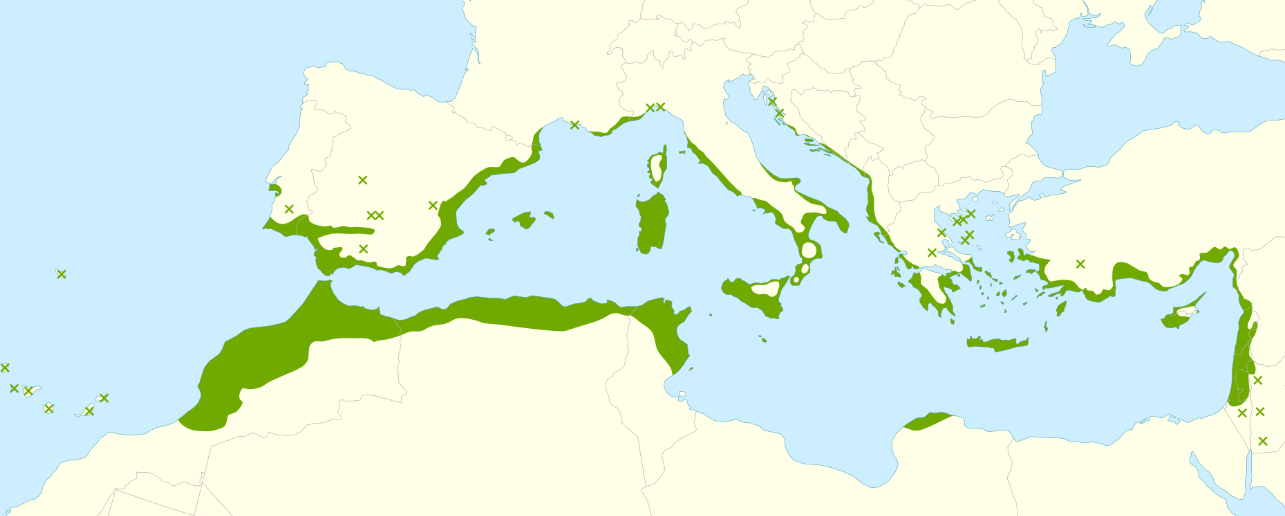
Ceratonia siliqua, commonly known as the carob tree, is a tree with dense foliage and thick shade. It produces fruits called carob pods, which are used for various purposes such as food, medicine, and industry. Carob pods are well-known for their nutritional properties and are traditionally used as a substitute for chocolate. The carob tree is resilient to harsh conditions, including the dry climates of the Mediterranean.
You can contact us by phone or email. Our representatives are here to address any questions or concerns you may have regarding our products or services.
Yes, we provide planting services in collaboration with specialized and certified professionals for the plants you purchase from us. Please contact us for more information and to schedule an appointment.
Yes, we do offer delivery services for our plants. Additional charges may apply depending on your location and the size of your order. Please refer to our shipping policy for more information.
Yes, we welcome visitors to our company by appointment. Please contact us to schedule a visit, and one of our representatives will be there to assist you.
In general, we prioritize the health and well-being of our plants and utilize practices that respect the environment whenever possible. Our plants are cultivated using sustainable methods, and we limit the use of pesticides or chemicals. If you have specific concerns, please feel free to contact us for more information.
The frequency of watering depends on the type of plant, soil type, and the climatic conditions of your area. Centenarian plants typically require less water than other plants, but you should monitor soil moisture and adjust watering accordingly.
Protecting your centenarian plants from climate change may involve providing shade, adding moisture to the soil, and applying pesticides to prevent diseases caused by climate change.
You can order centenarian plants by visiting our store. Additionally, you can contact us for more information and assistance with your selection.
The term "centenarian plants" refers to plants of advanced age that have survived and thrived for many years.
