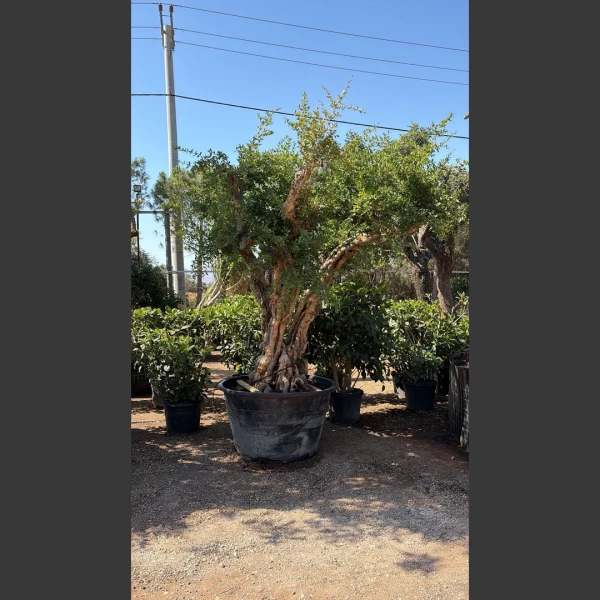
The pomegranate tree (Punica granatum) is a deciduous tree or shrub belonging to the Punicaceae family. Here are some key details about the plant:
Description: The pomegranate tree typically reaches a height of 5-8 meters, although it can grow taller under ideal conditions. Its leaves are small, lance-shaped, and glossy, measuring 2-5 cm in length. They are green and turn yellow or orange in the fall. The flowers are striking, with vibrant red or orange colors, usually blooming in spring and summer. The fruit, known as a pomegranate, is spherical and has a diameter of 5-12 cm. It has a tough, red outer rind, while the interior contains numerous seeds.
Origin: The pomegranate tree is native to the Middle East and northern India. However, it has spread to many regions worldwide due to favorable climatic conditions, and it is now cultivated in countries with Mediterranean, subtropical, and tropical climates.
Requirements: The pomegranate prefers warm and sunny climates with well-defined dry and rainy seasons. It is drought-tolerant but does not thrive in very cold climates. It grows well in well-drained soils, which can be sandy or slightly alkaline. The plant does not do well in wet or heavy soils.
Uses: The pomegranate is used as an ornamental plant due to its striking flowers and beautiful fruits. The fruit itself is very popular for its sweet and juicy flesh, rich in vitamins (especially vitamin C), antioxidants, and dietary fiber. It is also used in various traditional remedies and medicinal formulations.
Punica granatum is a versatile plant with significant nutritional and ornamental value, and it is particularly resilient in dry conditions.
4o