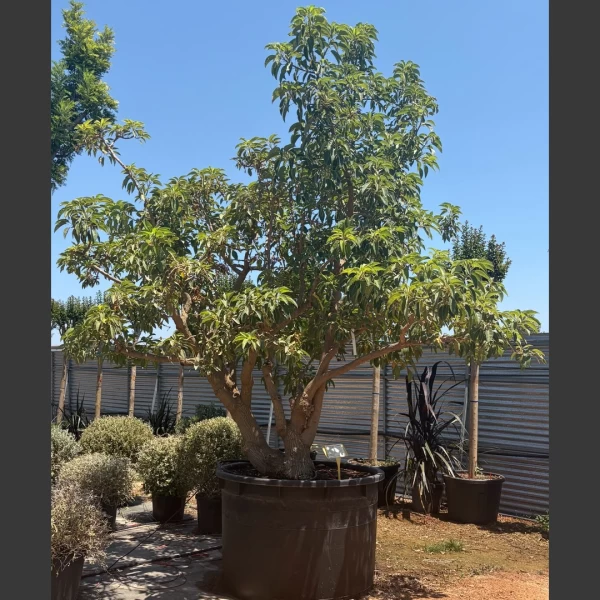
Phytolacca dioica, commonly known as “Ombu”, is an impressive evergreen plant belonging to the Phytolaccaceae family.
Description: It can reach heights of 10-15 meters, and sometimes even more under ideal conditions. Its leaves are large, ranging from 30-60 centimeters in length, and are typically green. The flowers are small and white, forming large, upright inflorescences that resemble spikes and appear in the summer. The fruits are spherical, initially green, and then turn red or black when ripe.
Origin: Native to South America, particularly in areas such as Peru, Bolivia, and Argentina. Due to its resilience to various climatic conditions, it has spread to other regions with mild or warm climates, including the Mediterranean and tropical areas.
Requirements: Thrives in warm, tropical or subtropical climates. It can tolerate mild frosts but is not suitable for regions with severe winters. Prefers well-draining soils but can also grow in various soil types. It can tolerate slightly alkaline soils. Prefers sunny spots but can adapt to partial shade. The plant grows quickly and can occupy a large space, which should be considered when planting.
Uses: Mainly used for ornamental purposes due to its impressive size and unique foliage. It is often planted in gardens, parks, and other public spaces. It provides shelter for various bird and insect species, but its fruits can be toxic if consumed in large quantities.
Phytolacca dioica is an impressive and robust plant that adds aesthetic value and beauty to gardens and landscapes with appropriate conditions.
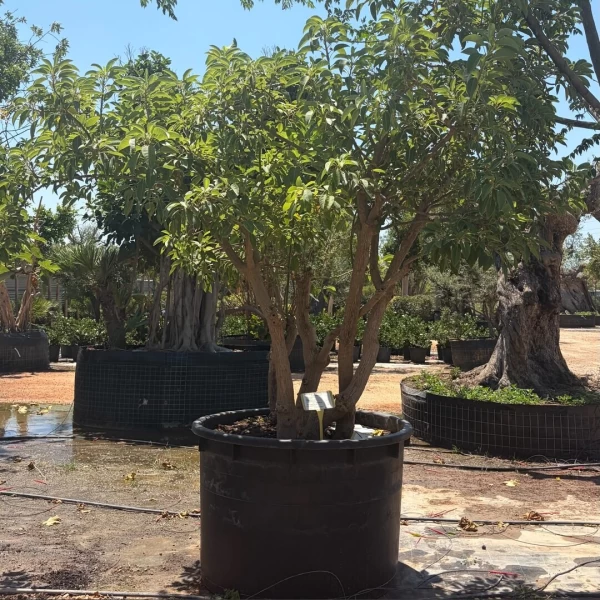
Phytolacca dioica | PD001
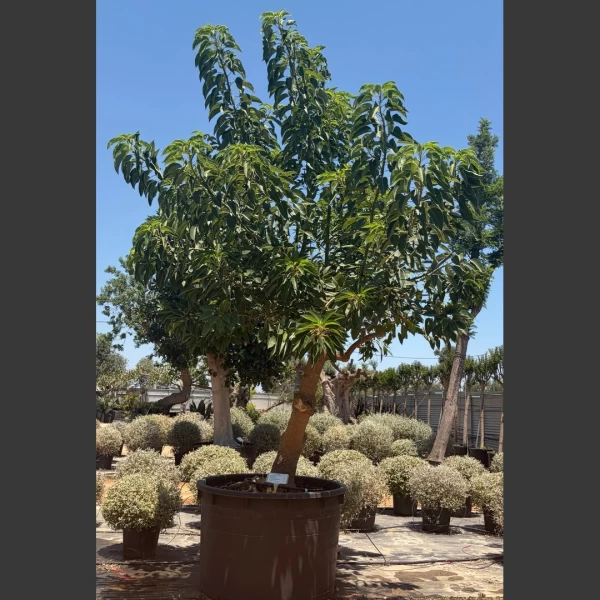
Phytolacca dioica | PD003