

Eucalyptus globulus, commonly known as the Tasmanian blue gum, is a popular species of eucalyptus. Here are some key details about the plant:
Description: Tasmanian blue gum is a large evergreen tree that can reach heights of 30 to 60 meters, with some mature trees growing up to 70 meters. Its leaves are lance-shaped, gray or blue-green, and are covered with a waxy coating that gives them a glossy appearance. The juvenile leaves are usually more rounded and distinct from the adult leaves. The flowers are white or pale pink and appear in large clusters. The fruits are dry capsules that open to release their seeds.
Origin: Eucalyptus globulus is native to Australia. However, it has been introduced and cultivated in many countries, primarily for commercial purposes. It is commonly found in Mediterranean countries, South America, and South Africa.
Requirements: It thrives in temperate and subtropical climates. It can withstand mild winters and hot summers. The tree prefers well-drained soils and can grow in various soil types, including sandy and rocky soils. It is drought-resistant and can tolerate periods of water scarcity.
Uses: Tasmanian blue gum is widely used as an ornamental tree in parks and gardens due to its impressive appearance and distinctive fragrance. Its wood is used in the production of paper, timber, and other products. The eucalyptus oil extracted from the plant has many commercial and medicinal uses.
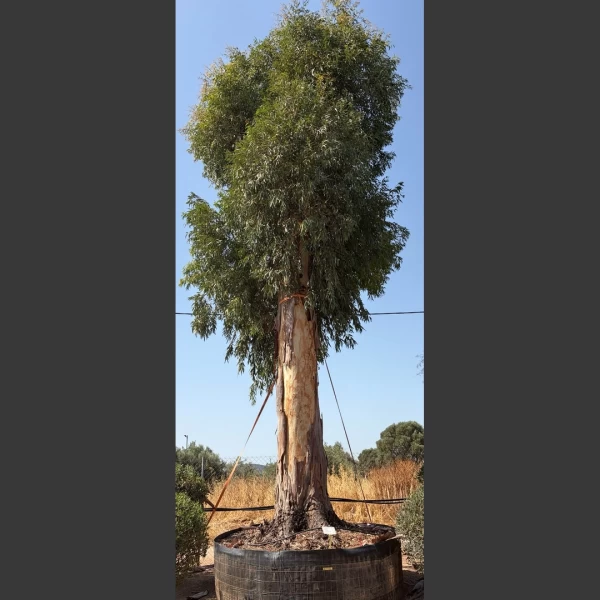
Eucalyptus globosum | EUG001

Eucalyptus globosum | EUG002

Eucalyptus globosum | EUG003
