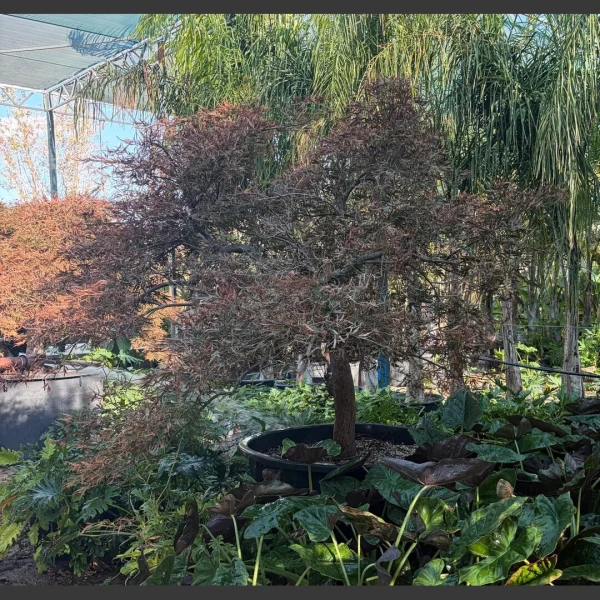
Acer palmatum, commonly known as the Japanese Maple, is a popular ornamental tree native to Japan, China, and Korea. Here are some key details about the plant:
Description: The height of the tree typically ranges from 3 to 10 meters, depending on the variety and growing conditions. Its leaves are compound, usually with 5-9 lobes that have a palmate shape and serrated edges. The leaf color varies from green to red, purple, or yellow, depending on the season and variety. The tree produces small, greenish-red flowers in spring. While not particularly striking, the flowers add a subtle interest to the overall appearance of the tree. The fruits are small, disc-shaped, red capsules containing seeds, usually appearing in summer.
Origin: Acer palmatum is found in Japan, China, and Korea. However, it is widely cultivated around the world as an ornamental tree in gardens and parks.
Requirements: The Japanese Maple prefers mild to cool climates. It is sensitive to temperatures below -15°C, although there are hardy varieties for colder regions. It thrives in well-drained, moist soils with a neutral to slightly acidic pH. Rich, organic matter is preferred. While it favors bright conditions, it can tolerate partial shade, although the intensity of leaf color may be reduced. Regular watering is necessary, especially during dry periods, as the soil should always be slightly moist but not waterlogged. Pruning is typically done during winter or early spring to maintain its shape and remove dead or unwanted branches. Periodic fertilization with balanced fertilizers ensures healthy growth.
Uses: The Japanese Maple is widely used as an ornamental tree due to its striking foliage and vibrant autumn colors. It is ideal for small gardens, containers, and as a planted tree in lawns or more natural garden designs.
Acer palmatum is an impressive tree that adds aesthetic value to any garden or landscape, and proper care can ensure long-lasting beauty and health.
Subcategories
Acer palmatum Dissectum
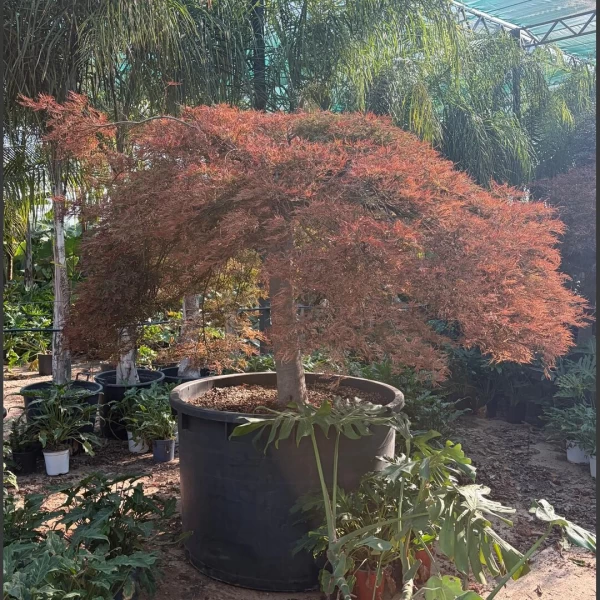
Acer palmatum Dissectum | APD001